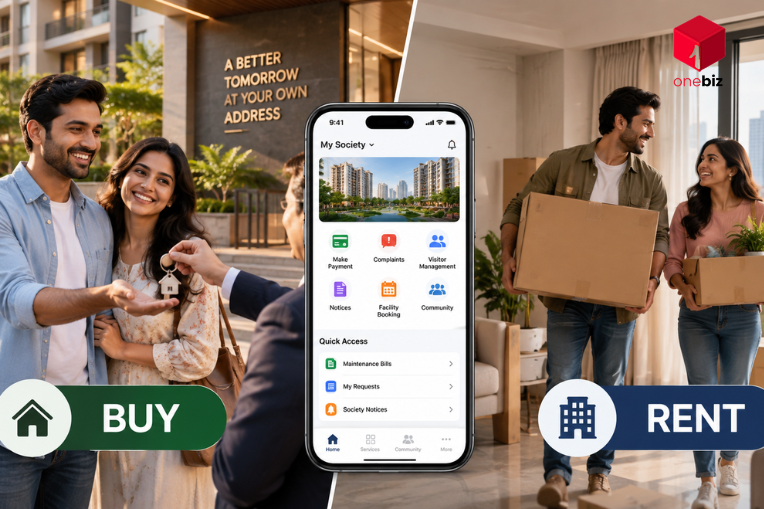
A home can be your biggest asset—or your biggest financial commitment. In 2026, deciding between buying and renting requires more than simply comparing a home-loan EMI with monthly rent. Modern residential living, supported by a smart society management app, is also changing how people evaluate convenience, transparency, security, and the overall cost of living.
Buying a Home: Building Long-Term Value
Buying can make financial sense for people planning to stay in the same location for several years. Every EMI gradually contributes toward ownership, while the property may potentially appreciate over time.
However, the real cost of buying extends beyond the purchase price. Buyers need to consider the down payment, loan interest, registration expenses, property taxes, maintenance charges, repairs, insurance, and other recurring costs.
The quality of society management also matters. A smart society management app can make residential ownership more convenient by bringing maintenance payments, complaints, notices, visitor information, and other community services into a digital system. CubeOneBiz’s society solutions, for example, provide features covering online bills and payments, complaints, facility bookings, visitor records, accounting, and communication.
Renting: Flexibility With Lower Upfront Commitment
Renting generally requires significantly less upfront capital than purchasing a property. It can therefore suit professionals who relocate frequently, people uncertain about their long-term location, or households that prefer keeping more money available for other financial goals.
Renters also avoid many ownership-related responsibilities, although rent increases and limited control over the property remain important considerations.
Interestingly, the future of community management technology benefits renters too. Digital notices, online payments, visitor management, complaint tracking, and community communication can improve the everyday experience regardless of whether someone owns or rents their home. This reflects the broader future of community management technology, where residential convenience increasingly depends on connected digital services.
So, Which Makes More Financial Sense?
There is no universal winner. Buying may suit someone with stable income, sufficient savings, and a long-term plan to remain in one location. Renting may be financially practical when flexibility, lower upfront costs, and liquidity are priorities.
Before deciding, compare the total five-to-ten-year cost—not simply rent versus EMI. Also consider the quality and efficiency of the community you will live in. As the future of community management technology evolves, tools such as a smart society management app are becoming another factor shaping the value and convenience of modern residential living.
Evaluate the numbers, understand your priorities, and choose the housing option that best supports your financial goals and lifestyle.